

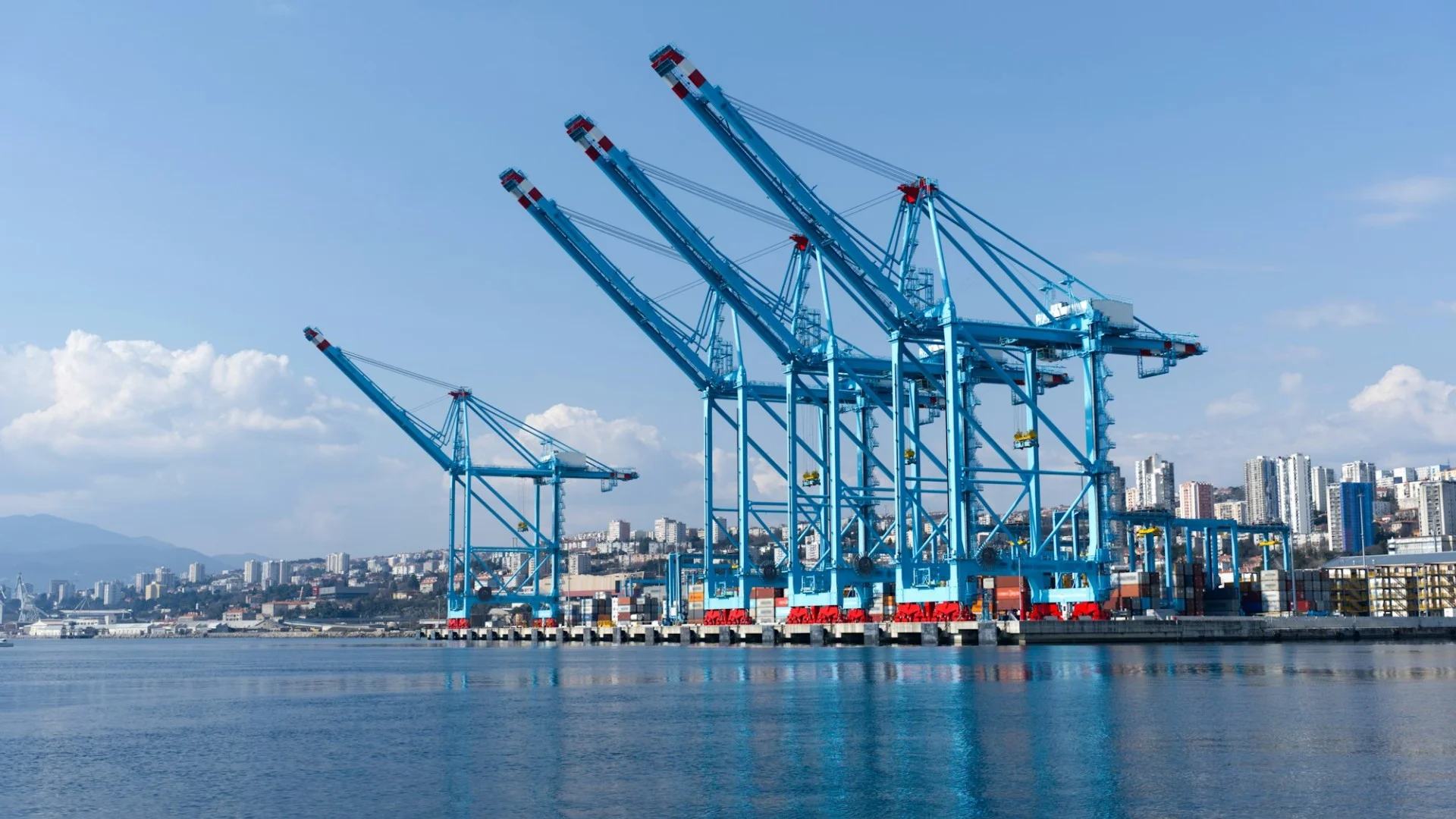
Ports are high-risk for cargo theft because they combine massive freight volume, complex multi-party operations, and numerous access points that are difficult to monitor around the clock. Various vehicles and third-party vendors all move through the same footprint, and any gap in oversight (a blind corner, an unstaffed gate, a shift change) becomes an opportunity. Criminal groups spend most of their time looking for these small weakspots in security to make their move. These criminal groups have taken notice and are shifting toward more organized, higher-value theft rather than opportunistic break-ins.
Quick answer: Ports attract thieves because high traffic and multiple access points make it hard to track every truck, container, and person on-site — and the payoff per theft has been climbing fast.
Key Takeaways
- Cargo theft in the U.S. and Canada reached an all time high.
- The average value stolen per theft rose sharply year over year, showing criminal groups are choosing targets more strategically.
- Insider collusion, fraudulent pickups, and identity-based theft are increasingly common alongside physical break-ins.
- Ports overseas have seen even sharper spikes: sea piracy near a major Southeast Asian shipping corridor jumped by triple digits year over year.
- Layered prevention (video-based remote guarding, access control, and predictive analytics) addresses both the physical and procedural sides of port vulnerability.
Why Ports Keep Landing on Criminals’ Radar
Ports are logistics ecosystems, filled with dozens of moving parts. That complexity is what makes them attractive targets. For a broader look at how theft risk plays out across rail yards, ports, and logistics corridors, see Alpha’s guide to remote video monitoring for industrial and commercial properties.
The numbers back this up. According to Verisk CargoNet’s 2025 annual analysis, estimated cargo theft losses across the U.S. and Canada climbed to nearly $730 million, a roughly 60% jump from 2024. Even though the total number of supply chain crime incidents stayed roughly flat. They’re being far more selective about which ones they hit.
Globally, the picture is similar. The 2025 Cargo Theft Report from BSI Consulting and TT Club found that criminal networks are extremley organized, technology-enabled, and adaptive across many real world senarious, and digital channels.
Common Port Vulnerabilities
Several structural realities make ports harder to secure than a typical commercial property:
- Blind spots. Large footprints with stacked containers, equipment staging areas, and rail spurs create natural sightline gaps that are difficult to patrol on foot.
- Inconsistent access at gates. Hiding in plain site is how most of the criminals are able to infultrate the Ports. High volumes of trucks, drivers, and third-party vendors moving in and out make it easy for unauthorized vehicles to blend in, especially during peak hours.
- Shift changes and overnight windows. Theft activity tends to cluster around the gaps in coverage that occur when crews rotate or staffing thins out overnight.
- Insider collusion. Both CargoNet and TT Club/BSI reporting point to a rise in schemes that involve someone with legitimate access (an employee, driver, or vendor) feeding information to outside criminal groups.
- Fraudulent pickups and identity-based theft. Its more than just onsite theft, some criminals are starting with technology to begin to infiltrate and learn more about the port prior to arrival. Criminals increasingly use compromised business email accounts or falsified paperwork to redirect legitimate shipments, a tactic that’s harder to catch than a straightforward break-in because it looks like normal business activity on the surface.
Prevention Strategies That Actually Close the Gaps
Real-time monitoring with live intervention. Static cameras only show you what happened after the theft already occurred. Remote guarding with live video feeds and support by the trained analysts who can verify a threat in progress and issue a real-time audio warning. That’s often enough to disrupt an incident before it escalates, instead of just reviewing footage after the fact.
Layered access control. Reducing the amount of way someone can enter a port and freely get around without checks is another great way to reduce the amount of thefts. That means credential checks at multiple checkpoints, not just the main gate, and tighter coordination between the access log and who’s actually authorized to be on-site that day.
Predictive analytics. Use AI to your advantage! AI-assisted video analytics can flag unusual patterns, like a vehicle lingering in a low-traffic area or activity outside normal operating hours, and route it to a live analyst for review. That cuts down on the noise so an analyst spends time on the activity that’s actually worth a second look.
Regular security audits. Never get complacent with your security system. You should be checking regularly for vulnerabilities that can shift as operations change. Pretty regular review check-ins of camera coverage, access logs, and staffing patterns help catch new blind spots before they turn into losses.
Frequently Asked Questions
Why are ports more vulnerable to theft than other commercial properties?
Ports are huge industrial playgrounds for criminals. Easy to infultrate and easy to get around without being noticed. Combining high cargo volume, multiple access points, and constant vehicle and personnel movement, which makes consistent monitoring harder than at a single-tenant commercial site. These vulnerabilities give the criminal groups more openings to exploit, particularly during shift changes or in areas with limited camera coverage.
What is the biggest driver of port cargo theft losses right now?
CargoNet’s 2025 data shows criminal groups targeting higher-value shipments rather than increasing the overall number of thefts. Estimated cargo theft losses across the U.S. and Canada rose sharply in 2025 even as total incident counts stayed close to flat, reflecting a more selective, strategic approach by organized theft rings.
Can remote video monitoring actually prevent theft at a port, not just record it?
Yes. That’s the core distinction between passive cameras and remote guarding. Live monitoring with two-way audio allows a trained analyst to issue a verbal warning and coordinate a response the moment suspicious activity is detected, rather than only providing footage after a loss has already occurred.
How common is insider involvement in port and cargo theft?
Insider collusion is a recurring theme in theft reports, meaning that criminal networks often relying on someone with legitimate access (an employee, driver, or vendor). They use your employees to identify targets or bypass controls. This may be done intentionally or unintentionally. Making vetting, access audits, and behavioral monitoring an important complement to physical security.
What role does technology like AI-integrated cameras play in port security?
AI-integrated technology helps flag unusual activity, such as a vehicle idling in a restricted area or movement outside normal hours, so a live analyst can quickly assess whether it warrants intervention. It’s a way to manage the scale of a busy port without relying on constant manual review of every camera feed.
Alpha Video Surveillance is a Las Vegas-based remote guarding technology company (PILB License #2274B) providing live video monitoring, two-way audio talk-downs, and AI-integrated detection for commercial, industrial, and logistics properties, including ports and distribution hubs across the region. Our team works directly with property managers and logistics operators to design monitoring strategies suited to high-traffic, multi-access environments.
Author: McCall Brown, CEO and co-owner of Alpha Video Surveillance since 2021, has spent more than a decade building security companies and working directly with commercial and industrial clients on proactive protection strategies. Read McCall’s full bio.
Local signal: Headquartered at 5655 Badura Ave, Suite 160, Las Vegas, NV 89118, Alpha Video Surveillance supports port, rail, and logistics properties throughout the region.
Protect Your Port Operation Before the Next Incident
Port theft rarely announces itself in advance. It shows up in the gaps criminals already know to look for. Schedule a demo to see how Alpha’s remote guarding technology fits your port or logistics property.