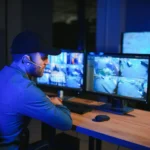


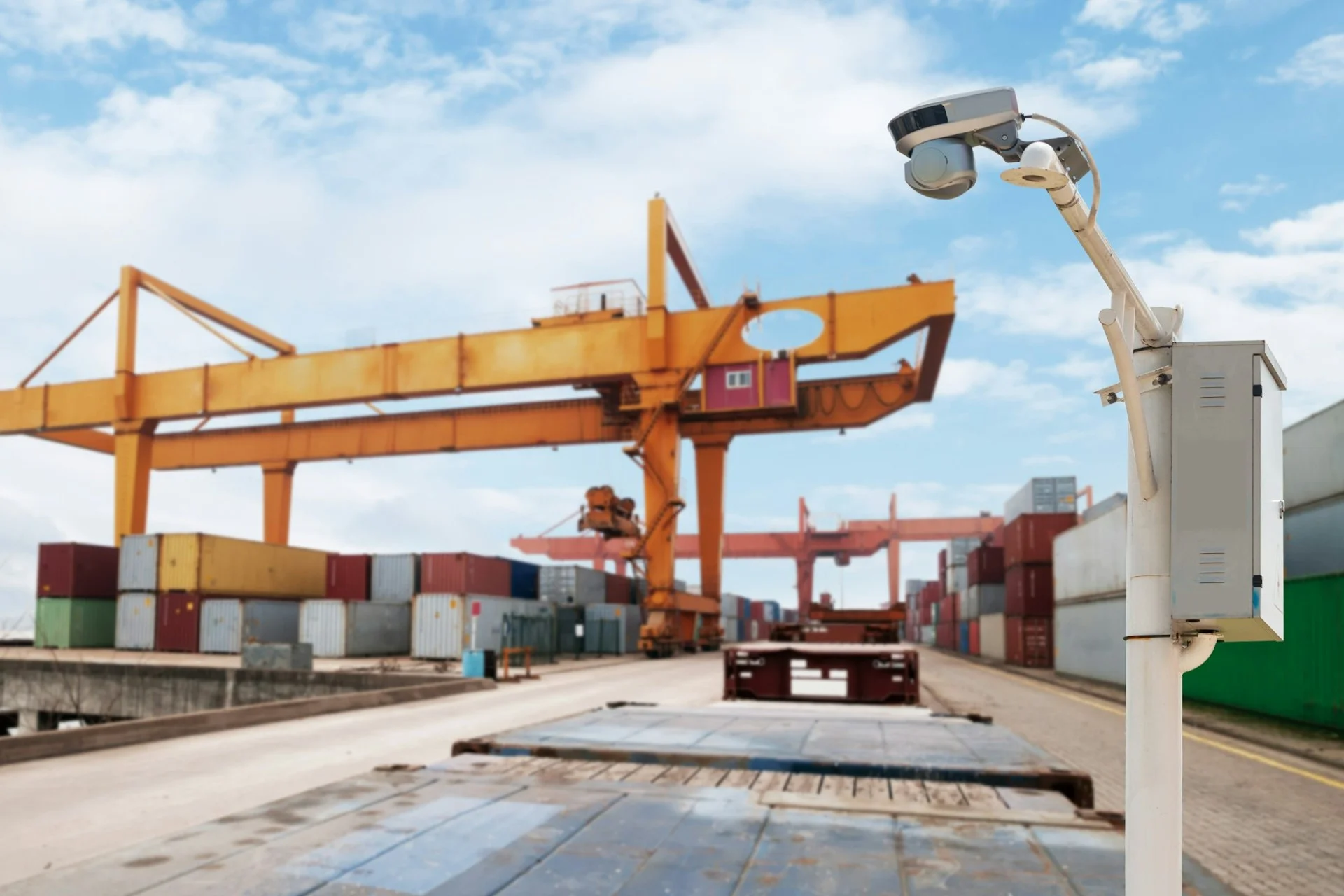
Modern port security combines perimeter defense, AI-integrated camera analytics, and live remote monitoring to protect cargo, cranes, chassis, and personnel across a terminal that never fully closes. A Remote Guard model adds two-way audio talk-downs and real-time verification, so trained analysts can intervene the moment unauthorized activity is detected rather than only reviewing it afterward.
Key Takeaways
- Ports run 24/7, span large open areas, and store high-value cargo and equipment in the open — a combination that makes single-layer security systems inadequate on their own.
- Global maritime security incidents rose sharply in 2025, with piracy activity in Asian waters up 85% in the first half of the year alone.
- Equipment like cranes, chassis, and reefer units is a frequent, often-overlooked target for tampering and theft, separate from the cargo itself.
- Cybersecurity has become inseparable from physical port security, following real-world incidents that disrupted operations at major U.S. ports.
- Live remote monitoring with two-way audio talk-downs lets trained analysts intervene during an event, not just document it for review later.
Why Port Security Is a Different Problem Than Other Commercial Sites
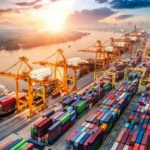
A port terminal doesn’t operate on a schedule. Vessels arrive around the clock, cargo moves continuously between the ship, the yard, and the truck, and the property spans hundreds of acres with dozens of active access points.
That scale is exactly what makes ports attractive targets. U.S. seaports move an enormous volume of trade — roughly $1.4 billion tons of foreign trade cargo, including more than 11 million maritime containers, arrive at U.S. seaports each year. Every one of those containers represents a moment of exposure: sitting in a stack, waiting on a chassis, or staged near a gate before it moves again.
Global data shows the threat isn’t slowing down. A 2025 Cargo Theft Report from BSI Consulting and TT Club found that maritime piracy incidents in Asian waters rose 85% in the first half of 2025 alone, reaching the highest levels in nearly a decade, with the Strait of Malacca and Singapore recording a 281% year-over-year surge. Closer to home, Verisk CargoNet’s 2025 annual analysis put estimated U.S. and Canadian cargo theft losses at nearly $725 million, a 60% increase from 2024. Ports sit at the center of both trends — as points of origin, transfer, and vulnerability.
Cargo Isn’t the Only Thing at Risk — Equipment Is Too
Most port security conversations start and end with cargo theft. That leaves a gap, because equipment tampering and theft are their own ongoing problem:
- Cranes and gantry equipment, where unauthorized access can mean sabotage, vandalism, or a safety incident, not just theft.
- Chassis and yard trucks are frequently targeted for parts or unauthorized use.
- Refrigerated containers (reefers), where tampering can spoil an entire load of temperature-sensitive cargo before theft even comes into play.
- Fuel, tools, and maintenance equipment are stored in yard facilities, which are often less monitored than the cargo stacks themselves.
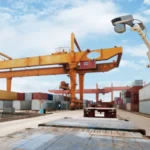
Live remote monitoring closes this gap by treating the whole yard — not just the container stacks — as the coverage area. AI-integrated technology that’s tuned to a port’s specific layout can flag someone approaching a crane cab after hours just as readily as it flags movement near a container stack.
The Layered Defense Model for Port Facilities
The most effective port security programs build in overlapping layers, so no single failure point compromises the whole site:
- Perimeter defense — fencing, controlled gates, and lighting across the terminal boundary and water-adjacent access points.
- Access control — credentialed entry for longshore workers, drivers, and vendors, with visitor and vehicle logging at every gate.
- 24/7 video monitoring — high-definition camera coverage across yards, berths, and equipment storage areas.
- AI-powered threat detection — analytics that separate genuine unauthorized activity from routine yard operations, vessel movement, and weather.
- Live Talk Downs with 2-way audio — a direct verbal warning issued the moment unauthorized activity is verified, to stop an incident before it escalates.
- Incident escalation protocol — a documented chain for verifying, recording, and reporting activity to the port authority security and law enforcement as needed.
This model mirrors the layered approach outlined in federal maritime security frameworks that have applied to U.S. ports since the Maritime Transportation Security Act, without requiring Alpha Video Surveillance to interpret or advise on regulatory compliance — that’s a conversation for your port authority’s compliance team.
Cybersecurity Is Now Part of the Physical Security Conversation
Port security used to mean fences, cameras, and guards. That’s no longer the whole picture.
The 2021 ransomware attack on the Colonial Pipeline — which also affected operations tied to the Port of New York and New Jersey — is one of the clearest examples of how a cyber incident can cause real, physical-world disruption at a port facility. More recently, cargo theft investigators have tracked criminal groups pairing phishing and stolen credentials with legitimate remote-access software to compromise carriers and facilitate physical cargo theft, blurring the line between a cybersecurity incident and a security guard’s job.
For ports, that means physical monitoring and network security increasingly need to be discussed in the same conversation, even when separate teams handle them. A camera system or access-control platform that isn’t itself hardened against unauthorized remote access becomes its own point of exposure.
Frequently Asked Questions
What is the difference between port security and cargo security?
Port security covers protecting the entire facility — perimeter, equipment, personnel, and vessels — while cargo security focuses specifically on protecting the goods being moved and stored. Effective port programs treat cargo security as one layer within a broader, facility-wide security strategy.
How can ports protect equipment like cranes and reefers from tampering or theft?
Extending AI-integrated video monitoring and live remote guarding to equipment storage areas, not just container stacks, closes this gap. Trained analysts can flag unauthorized access to a crane cab or reefer unit in real time and respond with a two-way audio talk-down before tampering occurs.
Is cybersecurity now part of physical port security?
Increasingly, yes. Incidents like the 2021 Colonial Pipeline ransomware attack showed how a cyber event can disrupt physical port operations, and criminal groups have since paired stolen credentials with remote-access tools to enable cargo theft — making network security a factor in overall port protection.
Do all U.S. ports have to meet the same security requirements?
Federal maritime security frameworks govern port security requirements and vary by facility type and cargo. Alpha Video Surveillance provides monitoring and remote guarding technology as part of a port’s broader security program; specific regulatory compliance questions should go to your port authority or legal counsel.
Can remote video monitoring replace on-site port security guards?
In many cases, remote video monitoring reduces the need for extensive on-site staffing by giving trained analysts live, verified visibility across a wider area than any single guard could cover on foot, while still supporting on-site personnel for physical response when needed.
What technology is used to secure shipping containers and cargo yards?
A combination of high-definition cameras, AI-based video analytics, and 24/7 live remote monitoring effectively covers container yards, allowing trained operators to verify unusual activity around stacked containers and respond immediately with two-way audio warnings.
See how Remote Video Monitoring & Live Guard Services apply this layered model to large, high-traffic facilities such as port terminals. For a security assessment, call (877) 287-2221 or email info@alphavs.com.
Conclusion & Next Steps
Cargo and equipment losses at ports rarely come down to one failure — they come down to a gap somewhere in the layers: a blind spot in coverage, an unmonitored equipment yard, or a system nobody was watching in real time. Closing those gaps takes perimeter defense, AI-assisted detection, and live human verification working together, not any single piece on its own.
Schedule a security assessment to identify where your terminal’s coverage gaps are, and how live remote monitoring with two-way audio talk-downs can close them.